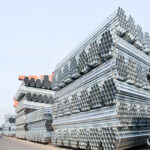
Stainless steel plate is one of the most widely stocked and specified products in fabrication, pressure equipment, food processing and architecture. Yet buyers often confuse sheet with plate, order the wrong surface finish, or miss the tolerance on thickness. This guide covers the practical points that matter on an RFQ: sheet vs plate, common finishes, 304/316 grades, tolerances and a checklist to send to your supplier.
Sheet vs plate — what is the difference?
The distinction is mainly thickness, and the exact cutoff varies by region and mill:
- Stainless steel sheet — generally up to about 3 mm (1/8 in). It is cold-rolled, thinner and usually supplied with a 2B or BA finish. Used for panels, cooking equipment, kitchen hoods and decorative work.
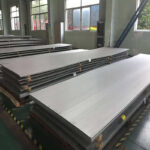
- Stainless steel plate — typically 3 mm and thicker, up to 100 mm or more. It is hot-rolled, annealed and pickled (or blasted) and is used for structural parts, flanges, pressure vessels, tanks and machined components.
Always state the exact thickness (mm or inch) on the PO rather than just saying “sheet” or “plate”, because price, weight and lead time change with it.
Which finish do you need?
Surface finish is a common source of rejection. Common options:
- 2B — the standard cold-rolled, matte-silver finish. This is the default for most fabrication work.
- BA (bright annealed) — a brighter, reflective finish used for appliances and decorative trim.
- No. 4 / brushed — a directional brushed grain, common in kitchens, elevators and architectural cladding.
- No. 1 (hot-rolled, pickled) — the standard plate finish, dull and gray, for industrial and pressure service.
- No. 8 (mirror) — highly polished, used for decoration and reflective surfaces.
304/304L vs 316/316L
- 304 / 304L — the general-purpose grade for indoor, food and architectural use. The low-carbon “L” version is preferred for welded fabrications because it resists sensitization in the weld heat-affected zone.
- 316 / 316L — adds molybdenum for better pitting and chloride resistance. Specify it for coastal, marine, chemical, pharmaceutical and heat-exchanger duties.
Standards and tolerances
Stainless plate and sheet are commonly ordered to ASTM A240 (chromium and chromium-nickel stainless steel plate, sheet and strip for pressure vessels and general applications) or ASTM A480 (general plate/sheet). Thickness, width and length tolerances are defined within these standards, and they are not zero — always agree on the allowable under-tolerance before ordering, because it directly affects weight and machined finish.
Buyer’s RFQ checklist for stainless steel plate
Send these details on every inquiry to avoid back-and-forth:
- Product: sheet or plate, with exact thickness (e.g. 3 mm, 6 mm, 10 mm).
- Width and length (or standard mill size).
- Grade: 304/304L or 316/316L.
- Standard: ASTM A240 / A480.
- Finish: 2B, BA, No. 4, No. 1 or No. 8.
- Quantity and required mill test certificate (EN 10204 3.1) — see our mill test certificate buyer checklist for what to verify.
Common mistakes to avoid
- Ordering “2B” on a plate that should be No. 1 hot-rolled.
- Ignoring the thickness tolerance and paying for material that is under-gauge.
- Using 304 in a chloride or coastal environment where 316L is required.
- Buying without a material certificate for pressure or food-contact service.
For help specifying the right stainless steel plate — thickness, finish, grade and tolerances — send us your drawing or requirements.
SOROYA PTE. LTD.
Email:nancy@soroya.com.sg
WhatsApp:+65 8058 3416