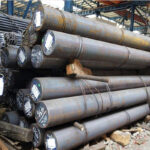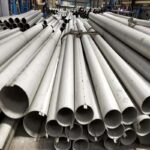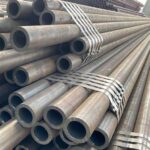
Industrial buyers do not usually struggle to find a stainless steel pipe supplier. The harder part is finding a supplier that can quote the right product form, the right documentation, and the right delivery basis without forcing multiple clarification rounds. When a request only says “304 pipe” or “316 tube,” the quotation often comes back incomplete or commercially misleading because the supplier has to guess at wall thickness, finish, testing scope, and export requirements.
For EPC contractors, stockists, fabricators, and project procurement teams, a better buying result comes from defining the application and commercial scope before asking for price. Whether you need stainless steel seamless pipe, welded stainless steel tube, or mixed sizes for fabrication and process service, this guide explains how buyers can shorten RFQ cycles and improve quote quality.
Define Pipe, Tube, and End Use Clearly
Buyers often use pipe and tube interchangeably, but suppliers usually treat them as different commercial categories. Stainless steel pipe is commonly purchased for fluid handling, pressure service, utility lines, and process installations. Stainless steel tube is more often used for mechanical fabrication, instrumentation, structural assemblies, heat-exchanger work, or projects where tighter dimensional control and surface appearance matter.
The enquiry should therefore explain the real use case. If the material is for a food-processing skid, a water-treatment package, a structural frame, or a chemical transfer line, say so at the start. That helps the supplier recommend the correct production route, applicable standard, and finish instead of quoting a generic market item that may not fit the project.
Choose the Grade by Service Conditions, Not Habit
304 stainless steel pipe and tube remains a practical option for many general industrial applications because it offers good corrosion resistance, broad availability, and workable fabrication performance. Buyers often use it for general utility systems, equipment frames, food-related structures, and moderate indoor or non-aggressive outdoor environments.
316 stainless steel pipe and tube is more commonly selected where chloride exposure, washdown chemicals, or corrosive process conditions are more demanding. It is frequently considered for marine-adjacent projects, pharmaceutical equipment, chemical processing systems, and installations where longer service life can justify the extra material cost. If welding is significant, low-carbon grades such as 304L and 316L should also be considered to reduce the risk of sensitization around the weld area.
From a purchasing standpoint, the supplier should know the service medium, operating environment, and whether the material will be welded, polished, bent, or machined. That information leads to more accurate grade recommendations and fewer revised offers.
Decide Whether Welded or Seamless Is Actually Required
Many buyers ask for seamless stainless steel pipe by default, assuming it is always the safer choice. In reality, the better question is whether the application or specification truly requires seamless production. Seamless stainless steel pipe may be appropriate for certain pressure duties, code-driven systems, or specifications where the production route is explicitly defined. It can also be the preferred option when project documents or end users insist on it.
Welded stainless steel pipe and tube, however, remains commercially suitable for a wide range of industrial and fabrication applications. It is often the more practical choice for structural uses, general process lines, mechanical assemblies, and export programs where shorter lead time and broader dimensional availability matter. Specifying seamless where it is not required can add cost and extend lead time without delivering a meaningful operating benefit.
RFQ Details That Help Suppliers Quote Faster
A strong RFQ for stainless steel pipe or tube should allow multiple suppliers to quote on the same basis. That improves comparability and reduces downstream disputes. Buyers should include:
- Product type: pipe, round tube, square tube, or rectangular tube
- Production route: welded, seamless, or supplier recommendation if open
- Material grade: 304, 304L, 316, 316L, or another required specification
- Size data: outside diameter or nominal pipe size, wall thickness, and length
- Applicable standard such as ASTM, ASME, EN, or JIS
- Surface finish such as pickled, mill finish, BA, or polished
- Quantity by size, plus any cut-to-length requirement
- Documentation such as MTC or EN 10204 3.1
- Destination port, packing expectation, and target shipment timing
When buyers provide this information early, suppliers can flag stock limitations, equivalent options, or lead-time issues before the quote turns into a negotiation problem.
Look Beyond Ton Price When Comparing Offers
Two stainless steel pipe quotations can look similar on the headline price and still be very different in practical value. One offer may cover basic stock material only, while another includes inspection support, upgraded packing, tighter tolerance control, or cut lengths that reduce workshop waste. Buyers should compare commercial scope line by line instead of focusing only on the cheapest number.
This matters especially for stainless steel tube supplier enquiries involving fabrication or repeat assembly. Straightness, tolerance consistency, end condition, and finish quality can directly affect cutting, welding, and fitting time after delivery. A slightly higher purchase price may still be the lower total project cost if the material arrives ready for efficient downstream processing.
Confirm Export and Supply-Chain Details Before Order Placement
For international orders, supply-chain execution is part of the product. Buyers should confirm document timing, marking requirements, bundle or crate method, partial shipment expectations, Incoterms, and whether third-party inspection is needed before production starts. These details can change both the true landed cost and the shipment schedule.
A reliable stainless steel pipe and tube supplier should also be able to explain whether the offer is based on stock or mill production, what certification is available, and what commercial assumptions could affect delivery. That level of clarity helps procurement teams avoid surprises when the order reaches logistics, customs, or fabrication.
Request a Stainless Steel Pipe or Tube Quote
If you are sourcing stainless steel pipe or tube for process lines, fabrication, industrial distribution, or project supply, send your grade, size schedule, wall thickness, finish, quantity, documentation requirement, and destination for a direct quotation. Better enquiry data usually leads to faster pricing, fewer revisions, and a more workable supply decision.
To request a quotation, contact nancy@soroya.com.sg or WhatsApp +65 8058 3416. If you already have a specification sheet, drawing, or RFQ table, include it with your enquiry so the supply scope can be reviewed on a practical commercial basis.
About SOROYA PTE. LTD.
SOROYA PTE. LTD. is a Singapore-based supplier supporting international stainless steel sourcing and supply-chain requirements.
General Manager: Nancy
General Manager Email: nancy@soroya.com.sg
WhatsApp: +65 8058 3416
Address: Singapore 14 ROBINSON ROAD, #08-01A, FAR EAST FINANCE BUILDING, 048545