When sourcing stainless steel pipe, one of the first technical questions is whether to specify seamless or welded (ERW) construction. The choice affects pressure rating, cost, availability and which standards apply. This guide explains the practical differences and how to choose the right one for your project.
What is seamless stainless steel pipe?
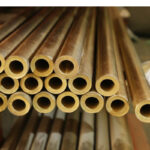
Seamless pipe is produced by piercing a solid billet and rolling it to the required outer diameter and wall thickness — there is no weld seam. Because it has no longitudinal weld, it is generally preferred for higher-pressure and higher-temperature service, and for applications where the weld could be a weak point.
What is welded (ERW) stainless steel pipe?
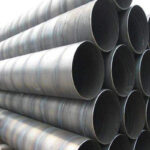
Welded pipe is formed from a stainless steel strip (coil) and longitudinally welded, usually by electric resistance welding (ERW) or TIG. It is typically more economical, available in longer lengths and in larger diameters than seamless, and is the standard choice for many low-pressure, architectural and utility duties.
Key differences at a glance
- Pressure and temperature: Seamless is preferred for higher pressure and higher temperature service; welded pipe is limited by the weld seam and is generally specified for lower-pressure duties.
- Diameter range: Seamless is commonly available in smaller to medium diameters; welded pipe is more economical for larger diameters and longer lengths.
- Cost: Welded pipe is usually cheaper per kilogram; seamless is more expensive due to the piercing process.
- Wall thickness: Seamless is easier to source in heavier walls; welded pipe is commonly thin- to medium-wall.
- Inspection: Seamless relies on ultrasonic and hydrostatic testing of the whole piece; welded pipe additionally requires weld inspection (100% radiographic or ultrasonic on the weld).
Which standards apply?
Both types are commonly ordered to ASTM A312 (seamless, welded and heavily cold-worked austenitic stainless steel pipe for high-temperature and corrosive service) or ASTM A790 (seamless and welded ferritic/austenitic pipe). The construction method (seamless vs welded) is specified on the purchase order alongside the grade and schedule.
Grades: 304/304L vs 316/316L
- 304/304L — general-purpose, for water, mild chemicals and architecture.
- 316/316L — with molybdenum, for chloride, marine and chemical service.
Buyer’s RFQ checklist
Send these details on every inquiry to avoid back-and-forth:
- Construction: seamless or welded (ERW).
- NPS / outer diameter and wall schedule (e.g. Sch 10S, 40S, 80S).
- Grade: 304/304L or 316/316L.
- Standard: ASTM A312 (or A790).
- Length (random length or fixed cut length).
- Ends: plain, beveled or threaded.
- Whether a mill test certificate (EN 10204 3.1) is required — see our mill test certificate buyer checklist.
Common mistakes to avoid
- Specifying welded pipe for a high-pressure application where seamless is required.
- Ordering without stating the construction method, leading the supplier to default to the cheaper welded option.
- Forgetting weld inspection on welded pipe for critical service.
- Buying without a material certificate for pressure piping.
For help choosing between seamless and welded stainless steel pipe — diameter, wall, grade and standard — send us your drawing or requirements.
SOROYA PTE. LTD.
Email:nancy@soroya.com.sg
WhatsApp:+65 8058 3416