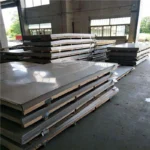
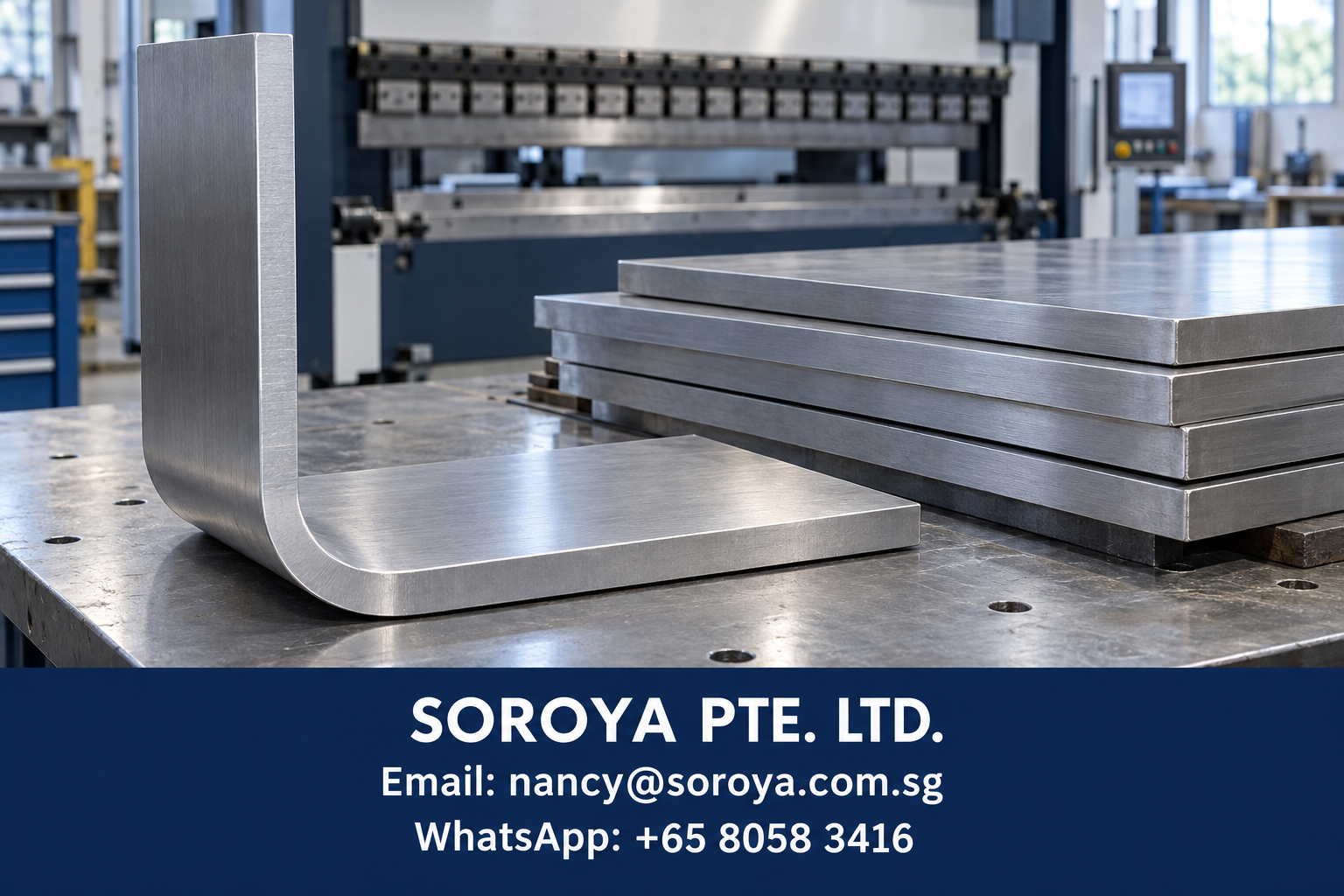
Buying stainless steel plate for bent brackets, equipment frames, trays or fabricated housings requires more than a grade and thickness. A plate that meets its material specification may still need a different tooling setup, a revised blank size or extra surface protection to become an acceptable finished component. Those details affect both the quotation and the production schedule.
This stainless steel plate bending guide helps purchasing teams prepare a practical enquiry. The objective is to agree what material is being supplied, who controls the forming process and how the finished result will be checked before a repeat order begins.
Define Whether You Need Plate, Blanks or Bent Parts
Start by identifying the supply boundary. Are you buying full plates for your own workshop, cut blanks for a subcontractor, or completed bent components? Each option places responsibility for material yield, dimensional development and fabrication checks with a different party.
For full plates, provide the required usable dimensions and any restrictions on surface marks. For blanks, specify whether the buyer supplies an approved cutting file or expects the fabricator to develop it. For bent parts, issue a controlled drawing with a revision number. A finished-part drawing should take precedence over an informal sketch or an old sample unless the purchase order explicitly says otherwise.
Specify Grade and Delivery Condition Together
State the exact stainless steel grade, applicable material standard, thickness and delivery condition. Do not let a quotation substitute a general description such as “commercial stainless” for an agreed specification. If alternatives are acceptable, ask suppliers to list them separately with supporting documentation.
Delivery condition matters because forming behavior depends on material properties, not just the grade name. Request the relevant inspection certificate and ensure its identification remains linked to the delivered plates or blanks. Share the material specification with the forming contractor before ordering, especially when changing supplier, grade or thickness.
A material certificate supports verification of the purchased material. It does not establish that a particular bend geometry is achievable on the fabricator’s equipment or certify the dimensions of the finished component. Keep those approvals separate in the order documentation.
Agree Bend Radius and Springback Expectations
Show the required inside bend radius, finished angle and permitted variation on the drawing. Avoid treating the punch radius, final inside radius and outside radius as interchangeable dimensions. Ask the fabricator to confirm the proposed tooling and whether the geometry needs a trial before committing to production quantities.
Springback is the elastic recovery that occurs after the forming load is removed. Outokumpu’s stainless steel forming guidance explains that springback differs between steel groups and that changes in grade or thickness may require machine adjustments. Its guidance also identifies greater force requirements and springback challenges for high-strength materials such as duplex stainless steel.
For procurement, the useful conclusion is to request a process-specific feasibility check. A generic bend-radius ratio should not become an unconditional acceptance rule for every plate thickness, delivery condition and tooling arrangement. Have the responsible fabricator confirm the proposed radius and angle against the actual job.
Separate Blank Dimensions from Finished Dimensions
A flat blank’s developed length is not simply the sum of the finished outside flange lengths. The fabricator must account for the bend geometry and its process. If the buyer supplies both blank dimensions and final dimensions, clearly state which dimensions control acceptance and who may authorize corrections.
Identify functional features such as bolt-hole positions, mating faces and minimum clearances. Explain whether holes will be cut before forming or added afterward. Features near a bend need particular attention because the forming operation can affect their final position or shape. Let the fabricator review these details before the cutting file is released.
For example, a bracket may fit its assembly only when a mounting hole is correctly located relative to the base face. Measuring that hole from an unrelated blank edge can produce a component that passes the wrong check. Define measurement datums directly on the finished-part drawing.
Protect the Surface Through Cutting and Forming
Specify which surfaces are visible, which contact other components and which may carry normal processing marks. If a directional finish matters, show its orientation on the drawing. A supplier should not have to infer whether a tooling impression is acceptable from the word “polished.”
Ask how contact surfaces will be kept clean and how the plate will be separated from contaminating materials during handling. Where protective film is proposed, confirm that it is suitable for the agreed operations and that removal is included or assigned to the buyer. Film is a handling aid, not a guarantee against tooling damage.
Define the required edge condition as well. Deburring, corner treatment and any additional finishing should appear in the quotation scope. If the component needs cleaning or another specified treatment after fabrication, identify the requirement and responsible party before comparing prices.
Use a First Article to Confirm Acceptance
For a new bent component, agree whether a first article must be checked before the remaining quantity is produced. Record the material identity, drawing revision, critical dimensions, angle, radius and visible surface condition. Define the inspection method where access or geometry makes a dimension difficult to measure.
Keep raw-plate tolerances and finished-part tolerances distinct. Material thickness variation, forming variation and assembly requirements need to be considered together. If unusually tight tolerances are necessary, ask the fabricator to price the additional process control or finishing instead of assuming standard production will achieve them.
Request a Comparable Stainless Steel Plate Quotation
Send the grade, material standard, thickness, drawing revision, quantities, delivery destination and required date with your enquiry. Include the forming and inspection requirements above, then ask each supplier to identify exclusions, proposed alternatives and any tooling or first-article charges. Request packaging that supports the finished shape and protects surfaces during transport.
Contact SOROYA PTE. LTD. with your stainless steel plate specification and fabrication drawings to request a quotation. Tell Nancy whether you need full plates, cut blanks or sourcing support for a forming requirement, so the available supply scope and technical details can be confirmed before ordering.
关于 SOROYA PTE. LTD.
SOROYA PTE. LTD. 是一家总部位于新加坡的供应商,致力于满足国际不锈钢采购及供应链需求。.
总经理:南希
总经理电子邮箱:nancy@soroya.com.sg
WhatsApp:+65 8058 3416
地址:新加坡罗宾逊路14号,#08-01A室,远东金融大厦,048545