Stainless Steel Pipe Supplier Guide: How to Buy the Right Tube for Industrial Projects
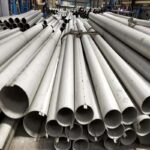
When buyers search for stainless steel pipe or stainless steel tube, they are usually solving a practical problem: controlling corrosion, handling pressure, meeting hygiene requirements, achieving a clean appearance, or extending service life in demanding conditions. The right product is not simply the lowest-priced pipe. It is the material, dimensions, finish, and supply arrangement that match the project’s actual operating environment.
For contractors, fabricators, distributors, and project procurement teams, a clear specification is the best way to reduce delays and avoid costly substitutions. This guide explains the main buying decisions to make before requesting a quotation from a stainless steel pipe supplier.
Why Stainless Steel Pipe and Tube Remain a Strong Commercial Choice
Stainless steel is widely used because its chromium-rich surface helps resist corrosion in many environments. Compared with ordinary carbon steel, stainless steel pipe can offer a longer useful life where water, humidity, chemicals, food-contact requirements, or outdoor exposure are concerns. It also combines strength with a neat, professional finish, making it suitable for both functional and visible installations.
Common stainless steel pipe applications include process lines, water treatment equipment, food and beverage systems, chemical facilities, architectural handrails, structural frames, automotive components, heat exchangers, and marine-related projects. The commercial value comes from more than appearance. Buyers often choose stainless steel tube to reduce maintenance, simplify cleaning, and improve reliability over the full lifecycle of an installation.
- Good resistance to rust and many corrosive environments
- Suitable strength for structural and process applications
- Clean surface for decorative and sanitary uses
- Good weldability and fabrication performance in many grades
- Reliable long-term value for export and industrial projects
How to Choose the Right Stainless Steel Grade
Material grade is one of the first points to confirm in any stainless steel pipe quotation. Grade 304 is a widely used austenitic stainless steel for general industrial, architectural, and food-processing applications. It provides good corrosion resistance and fabrication performance in many normal service conditions.
Grade 316 contains molybdenum, which generally gives better resistance in chloride-bearing or more aggressive environments. It is often considered for coastal locations, chemical exposure, salt-containing water, and applications where corrosion risk is higher. Choosing 316 is not automatically necessary for every job, but using 304 where the service environment demands 316 can cause premature staining or corrosion.
Buyers should avoid choosing a grade based only on the initial price. Share the medium being carried, operating temperature, installation location, and cleaning chemicals with the supplier. This makes it easier to assess whether 304 stainless steel pipe, 316 stainless steel pipe, or another grade is appropriate for the intended use.
Welded vs. Seamless Stainless Steel Pipe
The manufacturing route affects price, availability, and suitable applications. Welded stainless steel pipe is produced by forming strip or plate and welding the longitudinal seam. It is widely used, economical, and available in many sizes and finishes. For many structural, decorative, low-to-medium pressure, and general process applications, welded pipe is a practical choice.
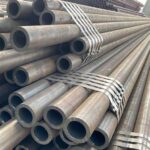
Seamless stainless steel pipe is produced without a longitudinal weld seam and is commonly selected for higher-pressure, higher-temperature, or more critical duties. It may be specified for certain petrochemical, power, hydraulic, and process applications. Seamless pipe normally carries a higher cost, so the choice should be based on the relevant standard and real operating conditions rather than a general assumption that it is always better.
Key Specification Details Buyers Should Confirm Before Ordering
A detailed request for quotation helps suppliers compare like for like and reduces the chance of receiving an unsuitable offer. Include the following information whenever possible:
- Grade, such as 304 or 316
- Product type: pipe, tube, seamless, or welded
- Outside diameter, wall thickness, and length
- Surface finish, such as mill finish, polished, or pickled
- Applicable standard or project requirement
- Quantity by piece, meter, or ton
- End use or service environment
- Packing, marking, and destination port
Pipe and tube are sometimes used interchangeably in day-to-day sourcing, but a project may distinguish them by application, tolerances, or standard. If the drawing calls for a specific nominal pipe size, schedule, ASTM, EN, JIS, or other standard, include that reference in the enquiry. A supplier can then quote against the technical requirement instead of making assumptions.
What Affects Stainless Steel Pipe Price
Stainless steel pipe price changes with the grade, nickel and alloy content, diameter, wall thickness, manufacturing route, surface finish, tolerance, and order volume. Small-diameter polished tube may be priced differently from industrial welded pipe even when the underlying grade is the same. Non-standard cut lengths, strict tolerances, testing requirements, and special packing can also affect the final offer.
For export buyers, compare quotations on the same basis. Confirm whether the price covers packing, inspection documents, freight terms, and destination-port delivery. The lowest per-ton figure can be misleading if it excludes a required finish, certificate, or service that another quotation includes. A useful stainless steel pipe supplier will clarify the commercial scope before the order is confirmed.
How to Evaluate a Stainless Steel Pipe Supplier
Reliable sourcing depends on communication as well as material availability. Look for a supplier that can work from a clear specification, explain quotation differences, and coordinate documentation for international delivery. For a project with multiple sizes, the ability to consolidate items and keep marking and packing organized can save time at the destination.
- Ability to quote against clear technical requirements
- Familiarity with international export documentation
- Consistent communication during sampling, production, and shipment
- Support for mixed sizes or project-based sourcing
- Willingness to clarify finish, tolerance, and testing details before order confirmation
Request a Quote with the Right Details
To receive a useful quotation, send the grade, diameter, wall thickness, length, finish, quantity, destination, and any drawing or material list available. For a stainless steel pipe or stainless steel tube requirement, these details allow the supply options to be evaluated more accurately and help avoid revisions later in the purchasing process.
Contact SOROYA PTE. LTD. to discuss your stainless steel sourcing requirements and request a quotation for your next project.
关于 SOROYA PTE. LTD.
SOROYA PTE. LTD. 是一家总部位于新加坡的供应商,致力于满足国际不锈钢采购及供应链需求。.
总经理:南希
总经理电子邮箱:nancy@soroya.com.sg
WhatsApp:+65 8058 3416
地址:新加坡罗宾逊路14号,#08-01A室,远东金融大厦,048545