Buying stainless steel pipe or stainless steel tube for export projects is rarely just a question of grade and price. International buyers also have to manage dimensional consistency, packaging, inspection documents, shipment timing, and the practical difference between what a mill can roll and what a fabrication team can actually use. When those details are left vague at the enquiry stage, the quotation may look competitive at first but create delays once production, inspection, or freight planning begins.
For EPC buyers, distributors, OEM sourcing teams, and fabrication contractors, the strongest procurement result usually comes from aligning the technical requirement with the commercial requirement before asking for a quotation. If you need stainless steel pipe and tube for process lines, support frames, skids, stock supply, or overseas construction programs, a precise RFQ can reduce back-and-forth, improve supplier accountability, and make offer comparison much more reliable. This guide explains how buyers can source stainless steel pipe and tube more efficiently for export-oriented orders.
Separate pipe, tube, and hollow section requirements early
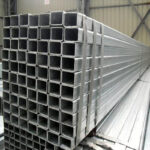
One of the most common sourcing mistakes is combining several product forms into one loose description. In practice, stainless steel pipe, round tube, square tube, and rectangular tube are not interchangeable quotation items. Pipe is commonly linked to fluid service, nominal pipe size, and schedule-based wall thickness. Tube is more often tied to exact outside dimensions, fabrication tolerances, or appearance requirements. Hollow sections may also require different packing and cutting arrangements compared with round products.
If a buyer sends a request for "stainless steel pipe/tube" without separating the line items, suppliers may quote different assumptions. One offer may be based on welded round tube, another on seamless pipe, and another on mixed stock lengths with no cut service. That makes the comparison difficult and increases the chance of commercial misunderstandings later. A better RFQ groups each product form clearly, with its own size range, quantity, finish, and manufacturing route requirement.
Choose grade according to service environment and downstream risk
304 stainless steel pipe and 304 stainless steel tube remain practical choices for many general industrial applications because they offer broad availability and workable corrosion resistance in moderate environments. Buyers often review 304 or 304L for indoor fabrication, utility lines, machine frames, food-related support structures, and general stock orders where chloride exposure is limited.
316 stainless steel pipe and 316 stainless steel tube are more commonly considered for coastal installations, chloride-bearing washdown areas, marine-adjacent projects, and chemical service where the corrosion margin matters more. For buyers, the key is not to request a higher grade automatically, but to explain the service condition clearly enough that the supplier can confirm whether the material choice is commercially sensible. Overspecification can increase cost and lead time, while underspecification can create avoidable replacement risk after installation.
Where welding is extensive, low-carbon variants such as 304L or 316L may also be relevant. If the order is tied to a project specification or end-user approval sheet, buyers should include that reference up front so the quotation does not need to be rebuilt later.
Define welded versus seamless on purpose, not by habit
Many buyers ask for 无缝不锈钢管 by default because it sounds safer commercially. In reality, seamless product is most useful when the application, code requirement, or owner specification actually demands it. Pressure service, certain process systems, and some project approvals may justify the additional cost and longer procurement cycle of seamless pipe.
For many fabrication and general industrial uses, however, welded stainless steel pipe or welded tube may be the more practical option. Structural assemblies, skids, support frames, ornamental-industrial combinations, and non-code mechanical applications often prioritize availability, dimensional range, finish options, and fabrication efficiency over a seamless manufacturing route. When buyers state whether welded alternatives are acceptable, suppliers can quote more realistically and sometimes improve both price and delivery.
Build the RFQ around dimensions, finish, and documentation
A useful export quotation depends on more than alloy grade. Buyers should specify outside diameter or section size, wall thickness or schedule, standard length or cut length, quantity by line item, finish requirement, and end condition. If the order includes polishing, deburring, laser-cut lengths, end caps, mixed bundles, or identification marking, those details should be included in the first RFQ rather than handled as post-quote adjustments.
Documentation is equally important. Many international shipments require mill test certificates, EN 10204 3.1 documents, heat-number traceability, or project-specific inspection support. Some buyers also need third-party inspection coordination or PMI-related confirmation before shipment. If these requirements appear only after the supplier has issued a low base quotation, the buyer may face revised pricing and lead-time changes. Clear documentation scope at the start produces more dependable supplier offers.
Think through logistics before comparing supplier prices
Export supply performance depends heavily on how the material is packed and shipped. Two 不锈钢管供应商 quotations may look similar on ton price while carrying very different logistics assumptions. One supplier may include seaworthy export packing, bundle tags, protective wrapping, and container loading support. Another may price only basic mill bundling, leaving the buyer to absorb repacking or higher transit-damage risk later.
This matters even more when the order includes polished tube, thin-wall material, small mixed sizes, or multiple consignee destinations. Buyers should ask how the supplier plans to pack, mark, and load the order, especially if the cargo will move through long transit routes or third-party consolidation. The lowest unit price is not always the lowest total procurement cost if handling issues create claim risk, workshop delays, or sorting problems at destination.
Compare quotations on supply value, not only on weight price
When reviewing offers from a 不锈钢管供应商 or tube supplier, buyers should compare the full commercial basis: product form, standard, manufacturing route, documentation, finish, packing, workable lead time, and any processing service included. A slightly higher offer may still be the better commercial decision if it reduces fabrication waste, avoids a second document review cycle, or supports faster customs clearance with complete paperwork.
This is especially true for project buyers managing approval deadlines. A supplier that responds clearly on traceability, shipment readiness, and mixed-item coordination can reduce internal project risk in ways that a simple ton-price comparison does not show. Better sourcing decisions usually come from evaluating total delivered usability rather than only the base metal figure.
Send a complete enquiry to shorten the buying cycle
If you are sourcing stainless steel pipe and tube for export resale, fabrication, process service, or construction supply, send your enquiry with grade, product form, dimensions, quantity, finish, documentation requirement, delivery destination, and target shipment timing in one package. Drawings, BOM files, and packing notes also help suppliers quote more accurately on the first pass.
For a direct quotation or enquiry, email nancy@soroya.com.sg 或 WhatsApp +65 8058 3416. If you already have a size list or project specification, send it together with your destination port and required documents so the quotation can be aligned to actual supply conditions.
关于 SOROYA PTE. LTD.
SOROYA PTE. LTD. 是一家总部位于新加坡的供应商,致力于满足国际不锈钢采购及供应链需求。.
总经理:南希
总经理电子邮箱:nancy@soroya.com.sg
WhatsApp:+65 8058 3416
地址:新加坡罗宾逊路14号,#08-01A室,远东金融大厦,048545