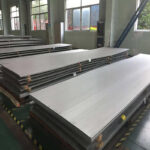
Buying cut-to-size stainless steel plate can reduce handling, simplify fabrication and avoid paying to transport material that will become scrap. However, a low cutting price does not guarantee a usable component. A blank that arrives undersized, bowed or without traceable identification can cost more to correct than the original saving.
For purchasing teams ordering base plates, brackets, equipment panels or machined blanks, the key is to define what must arrive at the workshop. This guide explains how to specify dimensions, cutting quality, documentation and delivery so quotations can be compared on the same basis.
1. Define the Finished Part and the Supplied Blank
Start with the approved drawing and distinguish finished dimensions from the dimensions required at delivery. A plate blank intended for milling usually needs an allowance around its perimeter. A component going directly into assembly may need tighter dimensional control and additional edge finishing.
For example, a finished part measuring 500 × 300 mm might be ordered as a 506 × 306 mm blank if the machinist approves 3 mm of stock on each edge. This is an illustration, not a universal allowance. The appropriate allowance depends on the cutting process, thickness, geometry and subsequent machining operations.
State units, drawing revision, quantity per part number and whether holes are final size or pilot features. If the drawing and a spreadsheet disagree, identify which document takes precedence before the order is accepted.
2. Specify the Material and Applicable Requirements
A stainless steel plate enquiry should include the exact grade, product specification, required delivery condition and nominal thickness. Use the material selected by the responsible engineer; the cutting supplier should not silently substitute another grade because it is easier to source.
For ASTM procurement, A480/A480M provides general requirements for flat-rolled stainless products supplied under specifications including A240/A240M. Identify the agreed editions and applicable product requirements in the order. The ASTM A480/A480M scope explains this relationship.
Keep raw plate acceptance separate from finished-part acceptance. Compliance with a plate specification does not automatically establish every profile dimension, hole position or machined surface requirement on your component drawing. List any additional inspection requirements and obtain written acceptance of them.
3. Match the Cutting Route to the Next Operation
Ask the supplier to identify the proposed cutting process and explain which operations are included after cutting. For a fabrication blank, price and adequate machining stock may matter most. For a visible or close-fitting component, edge appearance and dimensional consistency can be more important.
Waterjet is worth evaluating where avoiding a heat-affected zone is important. Outokumpu describes it as a cold cutting process and notes that cutting speed affects both surface quality and cost. Its waterjet cutting datasheet illustrates why a requested finish should be agreed alongside the cutting method.
For any proposed process, request the achievable tolerances for your actual material, thickness and geometry. Confirm whether the quotation covers deburring, edge dressing, bevel preparation or machining. Do not assume that a clean-looking cut is automatically suitable for a weld preparation or precision assembly.
4. Agree Flatness, Thickness and Inspection Conditions
Length and width are only part of dimensional acceptance. A plate can fit its outline while still failing the flatness needed for a mounting surface. Similarly, nominal thickness is not a promise of an exact thickness at every measurement point.
Define critical flatness and thickness requirements with the fabricator, including the measurement method and stage of inspection. A requirement before cutting may differ from the requirement after cutting or machining. Identify the inspection surface, support conditions and reference points where they affect acceptance.
For repeat orders or expensive parts, request a first-piece dimensional report before the remaining pieces are processed. Concentrate checks on features that affect assembly: mating edges, hole locations, diagonal measurements and any surfaces that will have limited machining allowance.
5. Preserve Traceability Through Cutting and Packing
Ask how each cut piece will remain linked to its parent plate and material documentation. A certificate supplied separately is less useful if nobody can connect it to the delivered blanks. Agree the marking method, identification map and packing-list references before production.
Where the project requires a particular inspection certificate, specify its type explicitly and request confirmation that it can be supplied. Additional testing, third-party inspection and witness points should be priced and scheduled before cutting begins.
Also define acceptable surface condition and protection. Identify cosmetic faces, prohibit marking on designated finished surfaces and agree suitable separators, edge protection and packaging. On arrival, check labels and photograph any damage before mixing the delivery with existing stock.
6. Compare the Total Cost per Usable Piece
Compare quotations by accepted part quantity, not only by price per kilogram. One offer may include material, cutting, identification and packing; another may exclude finishing or charge separately for the unused plate remainder.
Clarify how material yield is calculated, who owns reusable offcuts, whether actual or theoretical weight determines billing, and what happens when a piece fails the agreed inspection. Confirm transport terms, delivery location, document charges and the point at which the stated lead time begins.
For phased projects, compare a single consolidated shipment with scheduled releases. The cheapest unit price may create unnecessary storage and handling costs if the workshop cannot use the whole order immediately.
7. Send a Complete Stainless Steel Plate RFQ
Include grade and specification, thickness, drawing files, revision, blank dimensions, quantities, tolerances, edge condition, inspection documents and delivery destination. Highlight mandatory requirements and ask suppliers to list exceptions explicitly. This makes technical review faster and reduces avoidable clarification rounds.
Request a cut-to-size stainless steel plate quotation from SOROYA PTE. LTD. Send your drawings and purchasing requirements to nancy@soroya.com.sg or enquire via WhatsApp:+65 8058 3416. Ask for confirmation of the proposed supply scope, processing arrangements, documentation and delivery schedule before placing your order.
关于 SOROYA PTE. LTD.
SOROYA PTE. LTD. 是一家总部位于新加坡的供应商,致力于满足国际不锈钢采购及供应链需求。.
总经理:南希
总经理电子邮箱:nancy@soroya.com.sg
WhatsApp:+65 8058 3416
地址:新加坡罗宾逊路14号,#08-01A室,远东金融大厦,048545