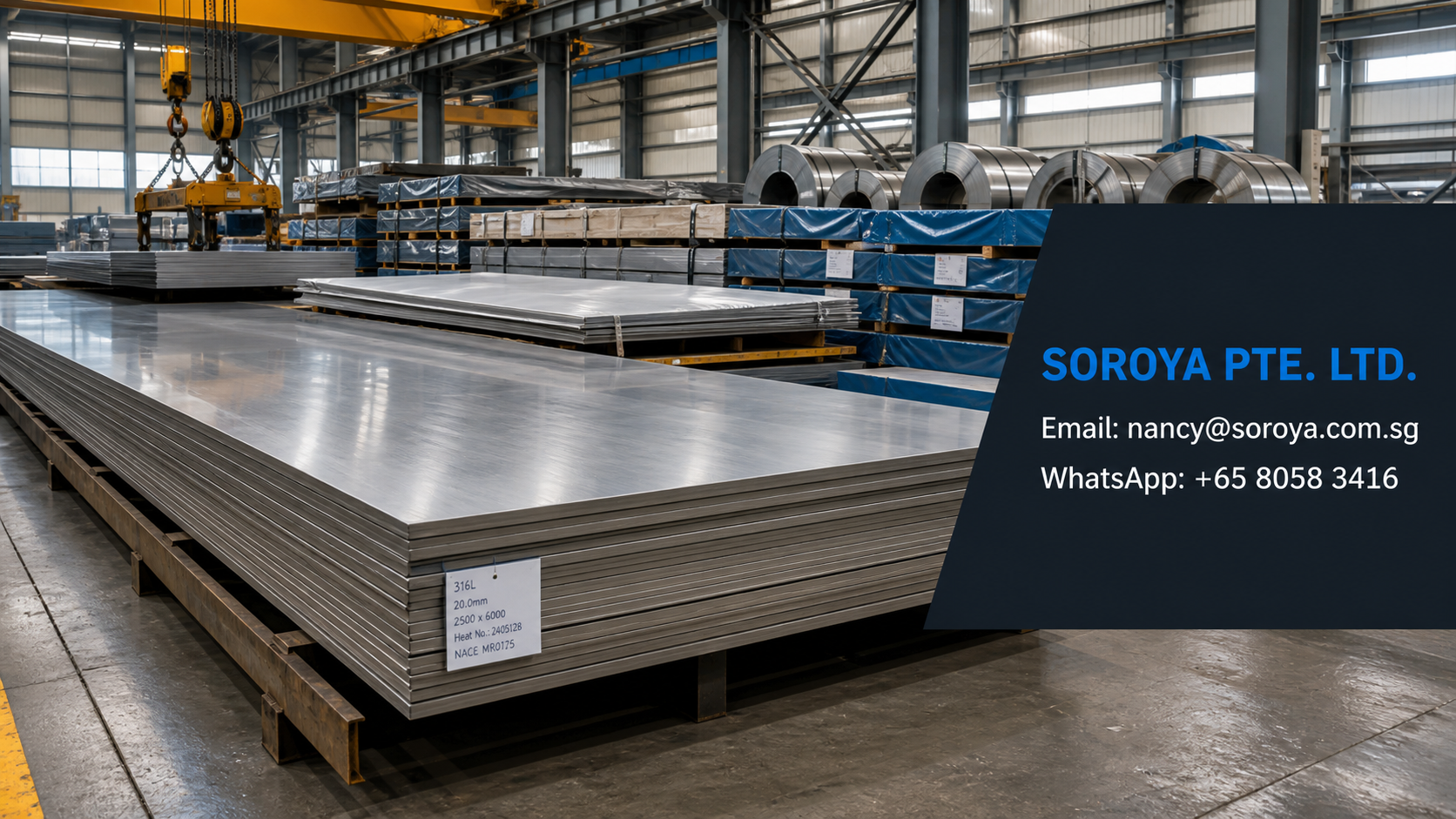
Industrial buyers sourcing stainless steel plate for pressure vessels, process equipment, and fabricated systems usually face the same commercial problem: a quote can look acceptable on paper but still miss critical details that affect fabrication, compliance, and delivery. When plate sourcing is handled only by grade and ton price, specification gaps often show up later in the form of welding issues, documentation problems, or plate dimensions that do not fit production planning.
For EPC contractors, vessel fabricators, skid builders, and stainless steel distributors, the better approach is to define the service condition and the purchasing basis clearly before asking for a quotation. That makes it easier to compare 304L stainless steel plate, 316L stainless steel plate, and cut-to-size supply options on a practical basis instead of only a headline price. This guide explains what industrial buyers should confirm when buying stainless steel plate for pressure-related and process-equipment applications.
Start With the Service Environment, Not Only the Grade Name
Many enquiries begin with a simple request for 304 or 316 stainless steel plate, but that does not always give the supplier enough information to quote correctly. The intended service environment matters. Plate used for storage tanks, water-treatment skids, mixing systems, food-processing equipment, chemical handling, or coastal installations may require different corrosion allowances and fabrication considerations.
304L stainless steel plate is often selected where buyers need a cost-effective austenitic grade with good formability, weldability, and general corrosion resistance. 316L stainless steel plate is commonly reviewed when chloride exposure, chemical washdown, marine-adjacent conditions, or more demanding process media require stronger corrosion performance. The low-carbon “L” grade is especially relevant when welding is part of the fabrication route, because buyers are typically trying to reduce the risk of sensitization in the heat-affected zone.
A useful RFQ does not only state the grade. It also explains the operating medium, service temperature range, corrosion concern, and whether the material will be rolled, welded, machined, or polished after delivery.
Thickness Tolerance and Plate Flatness Affect Workshop Efficiency
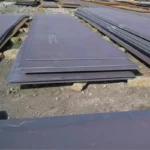
For pressure vessels and process equipment, plate quality is not judged only by chemistry. Fabricators also care about dimensional consistency. If the plate will be cut into shells, heads, nozzles, support structures, or internal components, poor flatness or inconsistent thickness can slow production and increase rework.
Buyers should confirm whether normal mill tolerance is acceptable or whether the project requires tighter dimensional control. The same applies to plate flatness, especially when the material will be laser cut, plasma cut, rolled, or assembled into skids with pre-engineered fit-up points. A lower offer is not necessarily the better commercial choice if the incoming plate creates avoidable workshop corrections.
When comparing stainless steel plate suppliers, it is worth asking how the quoted material will be supplied: full mill plate, stock plate, cut blank, or processed piece. That answer affects handling, yield, and fabrication cost.
Specify Surface Finish and Certification Up Front
Surface condition should be defined early because it affects both cost and suitability. For many industrial fabrications, hot rolled No.1 stainless steel plate is commercially appropriate. In other cases, buyers may need a smoother finish for downstream polishing, hygienic cleaning, or visible equipment surfaces. If the finish is not written into the enquiry, suppliers may quote different assumptions, which makes price comparison unreliable.
Documentation is equally important. Many buyers need mill test certificates, heat traceability, or project-specific inspection records before the plate can be released into fabrication. Some projects also ask for EN 10204 3.1 certification or third-party inspection support. Those requirements should be part of the first quotation request, not a later clarification after pricing has been issued.
For export orders, buyers should also confirm marking, palletization, moisture protection, and any destination-specific documentation that may affect dispatch timing.
Build a Stainless Steel Plate RFQ That Suppliers Can Price Correctly
A buyer-focused RFQ helps suppliers respond with fewer assumptions and fewer revisions. For stainless steel plate used in pressure vessels and process equipment, the enquiry should normally include:
- Grade and specification basis, such as 304L or 316L
- Thickness, width, length, and quantity for each line item
- Required finish, plate condition, and any edge-processing need
- Whether full-size plate, cut-to-size plate, or nested blanks are required
- Drawing references, fabrication notes, or applicable project standards
- Certificate requirements, traceability expectations, and inspection needs
- Packaging method, destination port, and target shipment window
If the project may allow alternative stock sizes, split shipments, or substitute cutting plans to improve lead time, that should be discussed early. Flexible purchasing structure can sometimes shorten delivery without weakening the technical outcome.
Compare Quotations Beyond Price Per Ton
Two stainless steel plate quotations can describe the same grade and thickness while offering very different commercial value. One supplier may be quoting existing stock with a short lead time but limited processing. Another may be quoting mill production with longer lead time but stronger dimensional coverage or documentation support. Buyers need to compare those offers line by line.
A sound quotation review should check origin assumptions, stock-versus-mill route, certificate level, processing scope, realistic dispatch timing, and packing basis. It is also sensible to confirm whether the supplier is quoting theoretical weight, actual cut weight, or a full-plate basis. These details influence landed cost and internal cost allocation, especially for export projects and large fabricated packages.
In practice, the most useful quotation is often the one that reduces uncertainty for the procurement and production teams. Clear supply terms usually save more money than an aggressive first-line rate with hidden clarifications.
Choose a Supplier That Supports the Whole Order Cycle
Industrial plate procurement does not end when the quotation is issued. Buyers should also judge whether the supplier can support communication during document review, production follow-up, pre-shipment checks, and export coordination. That matters when stainless steel plate will move directly into fabrication schedules tied to shutdowns, installation dates, or container booking windows.
If you are buying stainless steel plate for pressure vessels, process equipment, tanks, or skid fabrication, a better first enquiry leads to a better quote. Send the grade, size list, finish, certification requirement, destination, and delivery target together so the supplier can offer a practical commercial basis instead of a generic indication.
Für ein direktes Angebot oder eine Anfrage wenden Sie sich bitte an SOROYA PTE. LTD. by email at nancy@soroya.com.sg oder WhatsApp +65 8058 3416. Share your RFQ, drawings, or project requirement, and we can review a stainless steel plate supply option that fits your fabrication schedule and commercial priorities.
Über SOROYA PTE. LTD.
SOROYA PTE. LTD. ist ein in Singapur ansässiger Anbieter, der internationale Beschaffungs- und Lieferkettenanforderungen im Bereich Edelstahl unterstützt.
Geschäftsführerin: Nancy
E-Mail-Adresse des Geschäftsführers: nancy@soroya.com.sg
WhatsApp: +65 8058 3416
Adresse: Singapur, 14 ROBINSON ROAD, #08-01A, FAR EAST FINANCE BUILDING, 048545