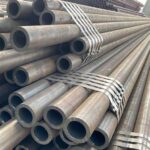
How to Buy Stainless Steel Pipe and Tube for Industrial Projects Without Expensive Specification Gaps
When buyers look for stainless steel pipe or stainless steel tube, they are usually trying to solve a technical and commercial problem at the same time. The material must fit the service environment, fabrication method, and project budget, but it also needs to arrive with clear specifications, practical lead times, and documentation that supports installation or export. If a quotation is based on incomplete information, delays and avoidable cost often appear later in the order cycle.
For procurement teams, fabricators, stockists, and EPC contractors, a disciplined sourcing approach helps reduce those risks. This guide explains what to confirm before sending an enquiry to a stainless steel pipe supplier, especially when the material will be used in industrial processing, water systems, fabrication, hygiene-sensitive applications, or international project supply.
Why Stainless Steel Pipe and Tube Stay in Demand
Stainless steel pipe remains a preferred choice because it combines corrosion resistance, mechanical reliability, and a clean surface finish. In many operating environments, it offers better long-term performance than ordinary carbon steel, particularly where moisture, chemicals, washdown procedures, outdoor exposure, or product cleanliness matter. That performance can translate into lower maintenance, fewer replacement cycles, and more stable operating life.
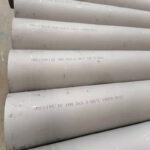
Industrial stainless steel tube is used across food processing, water treatment, chemical handling, architectural fabrication, pharmaceutical systems, heat exchangers, marine-related projects, and general equipment manufacturing. Some applications prioritize pressure handling or corrosion resistance, while others focus on appearance, hygiene, or fabrication efficiency. Buyers get better commercial results when the pipe or tube specification matches the real duty instead of being selected only on lowest unit price.
- Good resistance to rust and many corrosive service conditions
- Suitable for process lines, structural fabrications, and visible installations
- Available in welded and seamless forms for different technical needs
- Practical long-term value for industrial and export projects
- Clean metallic finish for sanitary or decorative applications
Choose Grade 304 or 316 Based on the Real Environment
Grade selection is one of the first issues to settle before requesting a quote. Stainless steel 304 pipe is widely used for general industrial, architectural, and food-related applications because it offers a practical combination of corrosion resistance, fabrication performance, and commercial availability. For many indoor, moderate, or non-chloride environments, 304 can be a sound and economical choice.
Stainless steel 316 pipe is commonly specified when chloride exposure, salt-bearing water, coastal conditions, or more aggressive cleaning chemicals create a higher corrosion risk. Its molybdenum content generally improves resistance in harsher environments. That does not mean every project needs 316, but it does mean buyers should not default to 304 when the service conditions clearly demand a higher-performing grade.
When sending an enquiry, it helps to describe what the line will carry, whether the installation is indoors or outdoors, the operating temperature, and any chemicals involved in cleaning or process contact. This gives the supplier a better basis for recommending 304 stainless steel tube, 316 stainless steel tube, or another option that fits the application.
Understand Welded vs. Seamless Stainless Steel Pipe
Many buyers compare welded and seamless material without linking the difference to the actual application. Welded stainless steel pipe is produced by forming and welding strip, then finishing to the required dimensions. It is widely available, commercially competitive, and suitable for many structural, decorative, utility, and general process uses. For a large share of industrial sourcing, welded pipe is the practical default.
Seamless stainless steel pipe is manufactured without a longitudinal weld seam and may be selected for higher-pressure, higher-temperature, or more technically critical services. Certain petrochemical, hydraulic, power, and process specifications call for seamless material based on design code or operating conditions. Because seamless usually carries a higher cost, buyers should confirm whether the project actually requires it instead of assuming it is automatically the better choice.
Tube sourcing can involve similar questions. In some projects, pipe and tube are used informally as interchangeable terms. In other cases, the difference affects tolerances, end use, measurement method, and governing standard. That distinction should be clear before commercial comparison begins.
Key Specification Details to Include in Your Enquiry
The fastest way to improve quotation quality is to provide a complete request for quotation. A stainless steel pipe supplier can only compare options accurately when the technical and commercial inputs are clear.
- Grade, such as 304, 304L, 316, or 316L
- Product type: pipe or tube, welded or seamless
- Outside diameter, wall thickness, schedule, or tolerance requirement
- Length, random length, or cut-to-size requirement
- Surface condition, such as mill finish, pickled, or polished
- Applicable standard, drawing, or project code
- Quantity by piece, meter, or metric ton
- Destination port, packing requirement, and delivery term
If the material is intended for fabrication, let the supplier know whether it will be bent, welded, polished, or used in a hygiene-sensitive environment. These practical details influence the right finish, tolerance, and supply route. A strong enquiry reduces the chance of receiving mismatched offers that look competitive on price but fail the project requirement.
What Usually Drives Stainless Steel Pipe Price
Stainless steel pipe price is shaped by grade, alloy content, diameter, wall thickness, production route, finish, order volume, and documentation requirements. A polished stainless steel tube for visible fabrication may price differently from industrial schedule pipe in the same grade. Tight tolerances, non-standard cut lengths, special packing, and inspection certificates can also change the final offer.
Export buyers should compare quotes on the same commercial basis. One quotation may include seaworthy packing, mill test certificates, or coordinated mixed-size shipment, while another may only reflect bare material supply. The more accurately buyers define the scope, the easier it becomes to compare real value instead of only headline price.
How to Evaluate a Stainless Steel Pipe Supplier Before Ordering
A dependable supplier should do more than send a number. Buyers generally benefit from a partner that can read a material list carefully, identify missing details early, explain grade or finish differences clearly, and support export documentation where needed. This matters even more when the order includes multiple sizes, mixed grades, or project-specific packing and marking requirements.
It is also worth checking whether the supplier can manage practical issues such as marking consistency, consolidated shipment, and communication during production and dispatch. Those operational details affect the buyer’s downstream efficiency almost as much as the raw material itself.
Request a Direct Quotation for Your Pipe or Tube Requirement
If you are buying stainless steel pipe or stainless steel tube for water treatment, fabrication, industrial processing, structural work, or export distribution, send your grade, size list, finish, quantity, and destination to receive a practical quotation. A detailed enquiry helps shorten the sourcing cycle and improves the accuracy of both pricing and delivery planning.
For a direct quotation, contact SOROYA PTE. LTD. with your specification, drawings, or bill of materials. Commercial enquiries are welcome by email at nancy@soroya.com.sg or by WhatsApp at +65 8058 3416.
Über SOROYA PTE. LTD.
SOROYA PTE. LTD. ist ein in Singapur ansässiger Anbieter, der internationale Beschaffungs- und Lieferkettenanforderungen im Bereich Edelstahl unterstützt.
Geschäftsführerin: Nancy
E-Mail-Adresse des Geschäftsführers: nancy@soroya.com.sg
WhatsApp: +65 8058 3416
Adresse: Singapur, 14 ROBINSON ROAD, #08-01A, FAR EAST FINANCE BUILDING, 048545