When a drawing calls for ASTM A240 stainless steel plate, the standard is the first thing buyers should confirm on the purchase order and mill certificate. A240 defines the chemical composition, mechanical properties, dimensional tolerances and testing requirements for chromium and chromium-nickel stainless plate, sheet and strip used in pressure vessels and general equipment.
This guide explains what ASTM A240 covers, the grades most commonly ordered, how it relates to SA-240 and A480, and the points buyers should verify before accepting a batch of stainless steel plate.
What does ASTM A240 cover?
ASTM A240/A240M is the standard specification for chromium and chromium-nickel stainless steel plate, sheet and strip for pressure vessels and for general applications. The “M” version covers metric units; the two are commonly referenced together as A240/A240M.
The standard applies to flat-rolled stainless products supplied in several product forms:
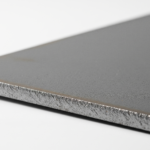
- Plate — thicker material, typically supplied for fabrication of tanks, vessels, structural parts and machine bases
- Sheet — thinner cold- or hot-rolled material for panels, linings and formed components
- Strip — narrow-width flat product for further processing
A240 covers both austenitic grades (such as 304 and 316) and ferritic grades (such as 430). It does not cover bar, pipe, tube or forgings, which follow their own product standards.
Common ASTM A240 grades
The most frequently ordered A240 grades for industrial fabrication are listed below. The grade number and UNS number should both appear on the mill certificate.
| Grade | UNS | Type | Typical use |
|---|---|---|---|
| 304 | S30400 | Austenitic, 18Cr-8Ni | General purpose, food equipment, architectural panels, tanks |
| 304L | S30403 | Austenitic, low-carbon 304 | Welded fabrication where intergranular corrosion after welding is a concern |
| 316 | S31600 | Austenitic, 18Cr-12Ni-Mo | Corrosive service, coastal and chemical environments |
| 316L | S31603 | Austenitic, low-carbon 316 | Welded equipment in chloride or chemical service |
| 321 | S32100 | Austenitic, stabilized with titanium | High-temperature service and heat-resistant parts |
| 347 | S34700 | Austenitic, stabilized with niobium | High-temperature welded components |
| 430 | S43000 | Ferritic, 17Cr | Decorative trim, appliances, non-magnetic-sensitive general parts |
For help choosing between 304 and 316, see our 304 vs 316 stainless steel grade selection guide.
A240 vs SA-240 vs A480: which standard applies?
Buyers often see three related standards on inquiry documents. They are not interchangeable:
- ASTM A240 — the commercial material specification for stainless plate, sheet and strip.
- ASME SA-240 — the same material requirements adopted into the ASME Boiler and Pressure Vessel Code (Section II, Materials). Pressure vessel and boiler work is commonly specified to SA-240 rather than A240.
- ASTM A480/A480M — the general requirements standard for flat-rolled stainless and heat-resisting chromium and chromium-nickel steel plate, sheet and strip. It governs dimensional tolerances, finish, inspection and delivery conditions; individual product standards such as A240 are used together with A480.
If your project is a registered pressure vessel, confirm whether the drawing requires SA-240 with the applicable ASME certification. For ordinary fabrication and general equipment, A240 alone is usually sufficient.
What the standard requires for material quality
A240 sets requirements that should be reflected on the material test report. Typical items include:
- Chemical composition — carbon, chromium, nickel, molybdenum and other elements within the grade limits; the certificate lists the analyzed (heat) values, not just nominal composition.
- Tensile and yield strength — minimum tensile strength, yield strength and elongation for the grade, tested from a specimen taken from the plate or sheet.
- Bend test — for applicable grades and thicknesses, the material must survive a controlled bend without cracking on the outer surface.
- Intergranular corrosion testing — for grades and conditions where sensitization after welding or heating is a concern.
- Dimensional tolerances — thickness, width, flatness and out-of-square limits, checked against the applicable general requirements.
Low-carbon “L” grades (304L, 316L) are normally selected for welded fabrication, because the reduced carbon content lowers the risk of intergranular corrosion in the weld heat-affected zone.
Check the mill test certificate (MTC)
For A240 plate, request a mill test report that matches the material supplied. Common certificate level is EN 10204 3.1, issued by the producer’s inspection representative. Verify that the certificate shows:
- Product standard and revision (A240/A240M, or SA-240 if required)
- Grade and UNS number matching the PO
- Heat number (heat melt number) marked on the plate
- Chemical composition and mechanical test results within limits
- Thickness, width, length and finish as ordered
- Any special requirement, such as cold-worked condition, pickled or polished surface
See our mill test certificate buyer checklist for the items to confirm on an MTC. Note that a certificate describing the grade is not enough if it cannot be traced to the actual heat delivered.
RFQ checklist for ASTM A240 stainless steel plate
When you send an RFQ, include the following details so the supplier quotes the correct material:
- Standard: ASTM A240/A240M or ASME SA-240
- Grade and UNS (e.g. 316L / S31603)
- Product form: plate, sheet or strip
- Thickness (mm or inch), width and length
- Surface finish (e.g. No.1 hot-rolled, 2B, No.4 brushed, HL)
- Condition (annealed, pickled, cold-worked if required)
- Quantity and whether cut-to-size or full mill sheet
- Certificate requirement (EN 10204 3.1, material traceability)
- Special tests or compliance, if the project specifies them
For weight and standard mill sheet dimensions, see the stainless steel plate weight and sizes guide, and for finish options see the sheet finish 2B, BA, No.4, HL and 8K guide.
Common specification mistakes to avoid
- Ordering the grade without the standard — “316 plate” alone does not state the specification. Always write A240 (or SA-240) plus the grade.
- Mixing up 316 and 316L — standard 316 has higher carbon and is not the default choice for heavy welded joints. Confirm whether the project needs the L grade.
- Skipping heat-number traceability — without a matching heat number, the certificate cannot be tied to the delivered plate.
- Ignoring pressure vessel certification — vessels built under code may require SA-240 and the relevant producer certification; commercial A240 may not satisfy that requirement.
About SOROYA
SOROYA PTE. LTD. supplies stainless steel plate and sheet in 304/304L and 316/316L to ASTM A240/A240M and SA-240 requirements, with material test reports and export packaging for wholesale and project orders. We can advise on grade, finish and cut-to-size requirements for your application.
SOROYA PTE. LTD.
Email: nancy@soroya.com.sg
WhatsApp: +65 8058 3416