Buying stainless steel pipe and stainless steel tube for hygienic process lines is rarely a simple price exercise. Food plants, beverage systems, pharmaceutical skids, water-treatment modules, and OEM fabrication programs all depend on material that matches both the service environment and the fabrication method. If an enquiry only states a grade and a nominal size, suppliers are left to guess the wall thickness, surface condition, testing scope, and documentation package. That guesswork often leads to slow quotation cycles, confusing offer comparisons, and avoidable changes after the order is placed.
For industrial buyers, the practical goal is to make the first RFQ clear enough that the supplier can quote the correct product form without filling in missing assumptions. Whether you need stainless steel seamless pipe, welded stainless steel tube, or mixed sizes for process skids and utility lines, the buying result improves when the technical requirement and the commercial requirement are stated together. This guide explains how procurement teams can source stainless steel pipe and tube more effectively for hygienic and process-line work.
Separate pipe, tube, and hygienic tube before asking for price
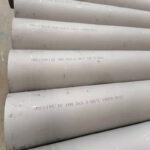
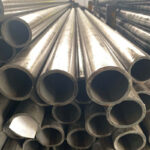
One of the most common sourcing mistakes is grouping several different products under a single description such as "stainless steel pipe/tube." In practice, these are not interchangeable quotation items. Pipe is usually linked to fluid service, nominal pipe size, and schedule-based wall thickness. Tube is more often specified by exact outside diameter or section size, dimensional tolerance, and fabrication needs. Hygienic tube may also introduce tighter internal finish, cleaner weld expectations, and different end preparation requirements.
When buyers separate each line item clearly, the quotation becomes much easier to compare. A supplier can state whether the offer is based on welded or seamless production, stock length or cut length, standard mill finish or a smoother process-oriented surface. That level of detail matters because the cheapest offer on paper may be based on a product form that does not actually suit the installation or fabrication route.
Choose the grade around the service environment, not habit
Common enquiries usually begin with 304 stainless steel pipe, 304L stainless steel tube, 316 stainless steel pipe, or 316L stainless steel tube. Those are reasonable starting points, but the better decision comes from the service condition. For many indoor utility systems, fabrication assemblies, and general processing environments, 304 or 304L may provide a practical balance of availability, corrosion resistance, and cost. If the system will face chlorides, aggressive washdown chemistry, marine-adjacent exposure, or more demanding process media, 316 or 316L is often reviewed because it generally offers a stronger corrosion margin.
Low-carbon grades such as 304L and 316L are often preferred when welding is part of the fabrication route. They can reduce the risk of sensitization in the heat-affected zone and support a more predictable result after fabrication. Buyers do not need to over-specify automatically, but they do need to explain the application well enough that the supplier can quote a grade that is commercially and technically sensible.
Know when seamless is necessary and when welded is the better commercial choice
Many RFQs ask for seamless stainless steel pipe by default because it sounds like the safer option. In reality, seamless product should usually be requested because the specification, code requirement, pressure duty, or end user actually demands it. There are applications where seamless is justified, especially when system approval or operating conditions require that manufacturing route.
For many process support systems, equipment connections, structural assemblies, and OEM fabrication programs, welded stainless steel pipe or tube may be the more practical choice. Welded product can offer broader dimensional availability, shorter lead time, and better commercial flexibility when the application does not require seamless construction. Asking suppliers to quote welded alternatives where acceptable can improve both price and delivery without reducing practical usability.
Build an RFQ that supports documentation and fabrication
A strong enquiry for a stainless steel pipe supplier or tube supplier should do more than list sizes. It should help the supplier understand how the material will be used and what documents must follow the shipment. For hygienic or process-line projects, the RFQ should usually identify the grade, product form, size range, wall thickness or schedule, finish expectation, manufacturing route requirement, length requirement, quantity, and destination.
It is also useful to define whether mill test certificates, third-party inspection, hydrotest records, pressure-test support, export packing, heat number traceability, or specific marking rules are required. If fabrication efficiency matters, state whether cut lengths, deburring, end finishing, or tighter tolerance control are commercially important. These details help suppliers quote on the same basis and reduce the risk of revisions after the order enters production.
Compare quotations on total project value, not only ton price
Two quotations for stainless steel tube can look very close on unit price while being very different in practical value. One offer may cover only stock material with basic mill bundling. Another may include cut-to-length service, cleaner packing, more complete documentation, and a lead time that fits the shutdown or installation window. For hygienic fabrication, straightness, surface consistency, and end condition can directly affect welding, fitting, and polishing time after delivery.
Buyers should compare quotations line by line: product form, standard, route, finish, certificates, packing basis, workable delivery date, and processing service. A slightly higher commercial offer may still reduce total project cost if it avoids repacking, simplifies QA review, or shortens fabrication hours in the workshop. That is especially true for export projects, where missing documents or inadequate packing can create delays long after the purchase order is issued.
Send complete enquiry data for a faster quotation
If you are sourcing stainless steel pipe and tube for food processing, pharmaceutical skids, water systems, fabrication projects, or export distribution, send the technical requirement and the commercial target together. Include the product form, grade, dimensions, finish, quantity, document requirement, destination, and required delivery timing in one package. Drawings, BOM files, and specification sheets help suppliers quote more accurately on the first pass.
For a direct quotation or enquiry, contact SOROYA PTE. LTD. at nancy@soroya.com.sg or WhatsApp +65 8058 3416. If you already have a line list, process specification, or fabrication drawing, send it together with your enquiry so the offer can be built around actual project conditions instead of assumptions.
About SOROYA PTE. LTD.
SOROYA PTE. LTD. is a Singapore-based supplier supporting international stainless steel sourcing and supply-chain requirements.
General Manager: Nancy
General Manager Email: nancy@soroya.com.sg
WhatsApp: +65 8058 3416
Address: Singapore 14 ROBINSON ROAD, #08-01A, FAR EAST FINANCE BUILDING, 048545