Choosing the right stainless steel pipe or stainless steel tube is not only a material decision. For buyers handling EPC packages, fabrication work, food-process lines, water treatment skids, or general industrial supply, the real cost usually comes from mismatched specifications, avoidable processing losses, and delivery risk. A lower quoted unit price means little if the material arrives with the wrong wall tolerance, inconsistent surface finish, or incomplete documentation.
This is why experienced buyers compare stainless steel pipe and tube beyond grade alone. They review the service environment, dimensional standard, end-use fabrication method, and commercial terms together. When that work is done early, sourcing becomes faster, total project cost is easier to control, and downstream rework is reduced.
Stainless steel pipe vs. stainless steel tube: what buyers should confirm first
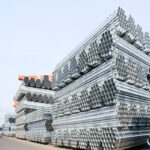
In many markets, buyers use the terms interchangeably, but procurement requirements are often different. Stainless steel pipe is commonly specified by nominal pipe size and schedule, especially for pressure service, process lines, and utility systems. Stainless steel tube is more often selected by exact outside diameter, wall thickness, and tighter dimensional expectations for fabrication, instrumentation, heat exchangers, decorative industrial assemblies, or mechanical components.
Before requesting quotations, confirm whether your project needs seamless or welded material, what dimensional standard applies, and whether the requirement is driven by pressure rating, bending performance, corrosion resistance, sanitary finish, or appearance. This avoids a common sourcing problem: receiving material that is technically stainless steel, but not practical for the intended manufacturing or installation process.
How to choose the right grade for corrosion resistance and fabrication
The most common commercial grades remain 304/304L and 316/316L. For many indoor, mild-corrosion, and general fabrication applications, 304 or 304L stainless steel pipe and tube can be a practical choice because it balances corrosion resistance, availability, and cost. When chloride exposure, marine atmosphere, chemical handling, or stricter corrosion performance is involved, 316 or 316L is often preferred because molybdenum improves resistance in more aggressive environments.
Low-carbon variants such as 304L and 316L are frequently requested where welding is expected, because they help reduce sensitization risk after welding. Buyers should also check whether they need annealed material, pickled and passivated surface condition, polished finish, or additional testing. If the line will be bent, expanded, or repeatedly welded, fabrication performance matters as much as corrosion data on paper.
For commercially useful sourcing, ask suppliers to quote the exact grade, manufacturing route, heat condition, and inspection documents together. This makes comparisons between offers more realistic and helps prevent disputes after the material reaches the workshop.
Key specification points that affect price, usability, and lead time
Three quotations for “stainless steel tube” can vary widely because the underlying specification is incomplete. Serious buyers should define these points clearly:
Size range and wall thickness: Outside diameter, nominal pipe size, schedule, and wall tolerance directly affect availability and freight cost.
Seamless or welded: Seamless stainless steel pipe may be required for some pressure, temperature, or code-driven applications, while welded tube can be cost-effective for many structural and process uses.
Surface finish: Mill finish, brushed, polished, BA, or sanitary finish will influence both cost and production time.
Length and cut-to-size service: Random length, fixed length, deburred ends, beveling, or custom cutting can reduce shop labor if agreed before shipment.
Testing and documentation: Mill test certificates, PMI support, hydrostatic or eddy-current testing, and export packing details are often necessary for industrial projects.
When buyers define these items at RFQ stage, suppliers can respond with a cleaner commercial offer. That improves quote accuracy and reduces the back-and-forth that usually delays procurement.
Common buyer mistakes when sourcing stainless steel pipe and tube internationally
One frequent mistake is buying only to the lowest price without checking whether the quote matches the intended standard and finish. Another is assuming all 316L or 304L material from different mills will perform identically in fabrication. In practice, dimensional consistency, surface quality, weld seam condition, and packaging discipline can vary and will affect shop efficiency.
Buyers also underestimate logistics details. Long-length stainless steel pipe and tube needs careful packing, container loading, and document coordination. Damage during transit, mixed heats, missing certificates, or incomplete marking can create delays after customs clearance. If the project has a shutdown window or fabrication schedule, these risks matter as much as the metal price itself.
A better purchasing approach is to align the technical requirement, commercial target, and delivery plan before placing the order. Ask for confirmation on lead time, packing method, certificate availability, and any value-added processing such as polishing, cutting, or bundle labeling.
What a reliable supplier should help you evaluate
A useful supplier should do more than send a tonnage price. For industrial stainless steel sourcing, buyers benefit most from partners who can review the application, clarify the difference between pipe and tube options, and highlight tradeoffs between grade, finish, lead time, and cost. That is especially important for mixed orders covering multiple sizes or both stainless steel plate and pipe/tube products in one project shipment.
Good supply support also means practical communication. Buyers should be able to request a quotation based on grade, size, standard, quantity, destination port, and document needs, then receive a commercially clear reply. The best sourcing process is the one that reduces uncertainty before production begins.
Request a quotation for your stainless steel pipe or tube requirement
If you are sourcing stainless steel pipe, stainless steel tube, or a mixed industrial stainless steel package, send your requirement with grade, size list, wall thickness, finish, quantity, and destination. A clear RFQ makes it easier to compare offers and secure material that fits your fabrication and delivery schedule.
For direct quotation and enquiry support, contact SOROYA PTE. LTD. with your project details. We can help review practical sourcing points before order placement so your team can move faster with fewer specification gaps.
About SOROYA PTE. LTD.
SOROYA PTE. LTD. is a Singapore-based supplier supporting international stainless steel sourcing and supply-chain requirements.
General Manager: Nancy
General Manager Email: nancy@soroya.com.sg
WhatsApp: +65 8058 3416
Address: Singapore 14 ROBINSON ROAD, #08-01A, FAR EAST FINANCE BUILDING, 048545