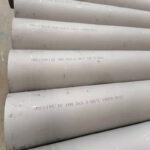
Stainless steel pipe and stainless steel tube are often grouped together in RFQs, but industrial buyers usually need something more specific than a generic price list. The practical question is not only which supplier can offer the lowest number. It is whether the quoted material actually matches the service environment, fabrication method, certification requirement, and delivery schedule behind the project.
For EPC contractors, fabricators, distributors, and plant buyers, a stronger sourcing process starts by narrowing down four commercial decisions early: grade, manufacturing route, dimensional standard, and documentation. When those items are clear, quotations become easier to compare and the risk of procurement delays drops significantly. This guide outlines how buyers can evaluate stainless steel pipe and tube requirements before requesting a quotation.
Pipe and Tube Are Related, but They Are Not Always Interchangeable
Stainless steel pipe is commonly ordered for process lines, fluid transport, pressure service, structural service, and general industrial conveyance. It is often specified by nominal pipe size, schedule, and the applicable pipe standard. Stainless steel tube is more frequently used for fabrication, heat exchangers, instrumentation, mechanical frames, hygienic equipment, and applications where outside dimensions, wall accuracy, or appearance matter more closely.
Buyers should avoid sending an enquiry that only says “304 stainless steel tube” or “316 stainless steel pipe” without clarifying whether the product is round, square, rectangular, welded, or seamless. A vague enquiry usually produces quotations based on different assumptions, which makes price comparisons unreliable and slows down order approval.
How Buyers Usually Choose Between 304 and 316 Stainless Steel Pipe or Tube
304 stainless steel pipe and tube is often the commercial starting point because it offers a useful balance of corrosion resistance, formability, and cost. It is widely used for general fabrication, food-related equipment, water handling with moderate exposure conditions, architectural use, and many standard industrial applications.
316 stainless steel pipe and tube is usually considered when chloride exposure, coastal conditions, chemical media, or stricter corrosion performance are part of the application. Buyers commonly look at 316 for marine-adjacent equipment, pharmaceutical systems, process lines, and applications where improved pitting resistance is important.
The correct grade should be linked to the real operating environment. If the service medium, cleaning chemicals, external exposure, or temperature range is unclear, buyers should describe those conditions in the enquiry rather than choosing a grade by habit. That gives the supplier a better basis for recommending whether 304, 304L, 316, or 316L is the more practical option.
Seamless vs Welded Stainless Steel Pipe and Tube
One of the most common buying questions is whether seamless material is always better. In reality, seamless stainless steel pipe can be the right choice when the specification requires higher pressure performance, critical process service, or a standard that explicitly calls for seamless production. It is often selected where inspection requirements and operating conditions justify the extra cost.
Welded stainless steel pipe and tube remains a practical option for many industrial and fabrication uses. Depending on the standard and application, welded material can support structural work, general process service, mechanical fabrication, decorative or architectural use, and cost-sensitive projects with shorter lead-time expectations.
The better question for buyers is not “Which is best?” but “Which production route is justified by the application?” If the project does not genuinely require seamless material, insisting on it can extend lead time and increase cost without delivering a meaningful commercial benefit.
RFQ Details That Improve Quote Accuracy
A good stainless steel pipe or tube RFQ should help the supplier quote the correct item without repeated clarification. In addition to grade, buyers should confirm the form, size basis, wall thickness, quantity, length, finish, and destination market. The intended application is also helpful because it can highlight whether a quoted standard or finish is unsuitable before the order moves forward.
Useful RFQ details usually include:
- Pipe or tube format: round, square, rectangular, seamless, welded, or ERW
- Size information: outside diameter or nominal pipe size, wall thickness, and cut length
- Required standard such as ASTM, ASME, EN, or JIS
- Surface finish expectations such as pickled, mill finish, BA, or polished
- Required certificates, mill test reports, or EN 10204 3.1 documentation
- Packing, marking, and destination port details for export shipments
Buyers who provide these details early typically receive more usable quotations. It also becomes easier to compare stock availability versus mill production and to avoid hidden differences between suppliers.
Why Finish, Straightness, and Tolerance Matter in Real Projects
Industrial sourcing decisions are not only about chemistry and price. Surface finish affects both appearance and downstream fabrication. For visible assemblies or hygienic equipment, finish can influence cleaning performance and commercial acceptance. For general industrial service, a mill finish or pickled finish may be entirely suitable and more economical.
Dimensional control matters as well. Straightness, end condition, cut tolerance, and wall consistency can all affect workshop productivity. This is especially important for rectangular stainless steel tube, precision fabrication, automated welding, or applications where fit-up time has a real cost impact. Buyers should mention these expectations before order confirmation instead of discovering the issue after material arrival.
How to Reduce Risk in International Stainless Steel Pipe and Tube Sourcing
For imported stainless steel pipe and tube, traceability and communication are as important as the unit price. Buyers should confirm the original mill source, available test certificates, realistic delivery timing, and inspection arrangement before shipment. If third-party inspection, project marking, or mixed-size container planning is required, those requirements should be agreed in advance.
Commercial clarity also matters. Incoterms, bundle packing, seaworthy protection, partial shipment expectations, and document timing can all influence whether a “competitive” quotation remains competitive once the cargo is ready to move. A supplier that understands both stainless steel specifications and export handling can often reduce coordination effort across repeat orders.
Request a Stainless Steel Pipe or Tube Quote
If you are comparing stainless steel pipe or stainless steel tube options for process service, fabrication, structural work, or industrial supply, share the grade, size, wall thickness, finish, quantity, and destination so the quotation can be built around your actual requirement. A clearer RFQ usually leads to faster pricing, better technical alignment, and fewer revisions.
For a direct quotation or sourcing discussion, contact SOROYA PTE. LTD. by email at nancy@soroya.com.sg or WhatsApp +65 8058 3416. If you already have a specification, send it together with your target quantity and delivery destination for a practical review.
About SOROYA PTE. LTD.
SOROYA PTE. LTD. is a Singapore-based supplier supporting international stainless steel sourcing and supply-chain requirements.
General Manager: Nancy
General Manager Email: nancy@soroya.com.sg
WhatsApp: +65 8058 3416
Address: Singapore 14 ROBINSON ROAD, #08-01A, FAR EAST FINANCE BUILDING, 048545