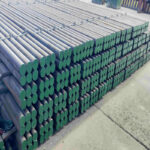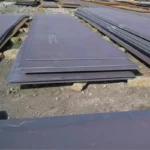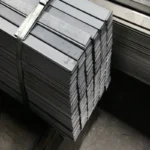
Two stainless steel plate quotations can name the same grade and thickness yet deliver very different fabrication costs. One may include a standard mill surface; another may include grinding, protection film, or inspection of a specified roughness. If the purchase order simply says “good finish,” both suppliers may interpret it differently. This guide explains how buyers can specify a stainless steel plate surface finish that matches the application and makes quotations easier to compare.
Start with the working surface and its purpose
Identify which face matters before selecting a finish. A hidden structural support, a visible equipment panel, and a product-contact tank component do not need identical acceptance criteria. Mark the working face on the drawing and state whether the reverse face also needs processing. Requesting a decorative finish on both sides can add cost without improving the finished assembly.
Describe the operating environment, cleaning method, appearance expectations, and fabrication sequence. A surface that looks attractive on delivery may still require treatment after welding. Where hygienic performance or corrosion resistance is critical, have the responsible engineer approve the surface specification alongside the material grade. Finish selection cannot compensate for an unsuitable alloy.
Understand mill finishes before requesting polishing
Hot-rolled, heat-treated and pickled plate commonly has a relatively matte industrial surface. Outokumpu identifies this processing route as 1D in its hot-rolled product guidance. It can be a practical starting point when the component will be fabricated or further finished, provided the application accepts its surface condition.
Cold-rolled flat products can offer a different surface appearance, but availability depends on thickness, grade, dimensions, and production route. Do not assume a finish advertised for thin sheet is available on a thick plate. Ask suppliers to identify the actual product form and processing route rather than treating “sheet” and “plate” as interchangeable purchasing terms.
For brushed or ground surfaces, require the applicable designation and a written description. A commercial finish name alone may leave differences in texture, direction, and appearance unresolved. Outokumpu’s surface finishes brochure notes the role of roughness values or surface samples in defining an exact specification.
Specify roughness and appearance separately
If the design requires a maximum Ra value, write it explicitly with its unit, measurement method, and inspection locations. Ra describes average surface roughness; it does not fully describe appearance, isolated scratches, or every feature relevant to cleaning. Ask who will measure it, when measurement occurs, and whether a report is included.
A grit number describes an abrasive processing choice and should not be accepted as a guaranteed Ra result. For visible equipment, agree on an approved reference sample as well as any numerical requirement. Define the grain direction relative to the plate length or drawing, because adjacent panels with different brushing directions can look mismatched.
For example, an enquiry could request one finished face with a project-approved maximum Ra, longitudinal grain, and acceptance against a retained sample. Insert actual engineering requirements before ordering. Avoid copying a roughness target from another application merely because the equipment looks similar.
Allow for thickness, flatness, and downstream fabrication
Surface grinding removes material. State whether the ordered thickness and tolerance must be achieved before or after finishing, particularly where minimum thickness is important. Include final dimensions, edge requirements, and flatness acceptance criteria. The ASTM A480/A480M overview describes general requirements for flat-rolled stainless steel plate, sheet, and strip; the purchase order should identify the applicable product specification and agreed standard editions.
Discuss whether finishing should happen before cutting, after cutting, or after fabrication. Pre-finished plate can simplify some operations, but handling and welding may damage the visible face. A large polished blank may also need additional protection during nesting and transport. Ask the fabricator to identify areas that will need final blending or treatment.
Where thermal cutting or welding is involved, specify responsibility for removing affected surface contamination and restoring the required condition. Do not assume the mill finish will remain unchanged through every manufacturing step. Include these activities in the cost comparison rather than leaving them for the receiving workshop to resolve.
Make inspection and protection part of the order
Request material identification and traceability appropriate to the project, together with dimensional and surface inspection records where required. A material test certificate establishes relevant material information; it does not automatically demonstrate that a subsequently polished face meets an agreed cosmetic sample or roughness limit.
Define how surfaces will be inspected: protective film removed where necessary, suitable lighting, agreed viewing conditions, and clear treatment of unacceptable scratches or dents. For multiple plates used in one visible assembly, discuss appearance consistency across the batch before production starts.
Specify separators, edge protection, and packaging that prevent rubbing during shipment. If adhesive film is requested, confirm compatibility with storage conditions and planned processing, plus removal instructions. Film protects against some handling damage, but it is not a substitute for dry, suitable packaging or careful unloading.
Compare the complete quotation and send a clear enquiry
Compare offers against the same finished requirement: grade, product specification, final thickness, dimensions, quantity, finished faces, roughness, appearance sample, inspection evidence, packing, and delivery basis. Ask each supplier to list exclusions and any subcontracted finishing. Confirm whether the lead time includes surface processing and inspection, rather than only material availability.
Send SOROYA PTE. LTD. your drawings and stainless steel plate requirements for a quotation. Include the intended application, delivery destination, required date, and any approved surface sample or inspection plan. Email nancy@soroya.com.sg or enquire via WhatsApp at +65 8058 3416 to discuss sourcing options and clarify the specification before placing your order.
关于 SOROYA PTE. LTD.
SOROYA PTE. LTD. 是一家总部位于新加坡的供应商,致力于满足国际不锈钢采购及供应链需求。.
总经理:南希
总经理电子邮箱:nancy@soroya.com.sg
WhatsApp:+65 8058 3416
地址:新加坡罗宾逊路14号,#08-01A室,远东金融大厦,048545