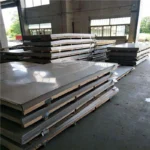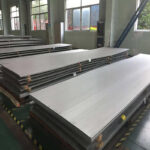
Buying stainless steel plate is rarely just a material question. For project buyers, fabricators, and equipment manufacturers, the real issue is whether the plate will match the service environment, processing method, inspection needs, and delivery plan without causing downstream cost. A quotation that looks competitive on paper can become expensive if the grade is overspecified, the finish is wrong for fabrication, or the size list creates avoidable waste.
A better sourcing approach is to define the technical requirement and the commercial requirement at the same time. When the enquiry is clear, suppliers can quote more accurately, buyers can compare offers on the same basis, and the final order is less likely to need revision. This guide explains what industrial buyers should confirm before requesting a quotation for stainless steel plate.
Why Stainless Steel Plate Is Chosen for Industrial Work
Stainless steel plate is widely used because it combines corrosion resistance, strength, weldability, and a clean surface condition that suits many industrial applications. Compared with ordinary carbon steel, it can reduce maintenance exposure in wet, hygienic, or chemically active environments. That makes it a practical option for food-related equipment, tanks, machine covers, water-treatment systems, fabrication components, and general project work where durability matters.
The main commercial advantage is not simply longer life. It is more predictable performance when the material has been matched correctly to the duty. Buyers usually get better results when they define the operating environment first and choose the plate specification second, rather than starting from the cheapest available ton price.
Choose the Right Grade Before Comparing Prices
For many general fabrication requirements, 304 stainless steel plate remains the standard commercial choice. It is widely available, offers good formability and weldability, and performs well in moderate indoor or non-aggressive environments. Buyers commonly specify 304 plate for equipment panels, fabrication parts, storage assemblies, and general industrial manufacturing where chloride exposure is limited.
316 stainless steel plate is more often selected for harsher conditions, especially where salt, chlorides, coastal exposure, or stronger cleaning chemicals increase corrosion risk. Its molybdenum addition generally improves pitting resistance compared with 304. In marine-adjacent, chemical, and hygiene-sensitive applications, the higher initial cost of 316 can be commercially justified if it reduces maintenance or premature replacement.
Low-carbon variants such as 304L and 316L may also be relevant when welding performance or post-weld corrosion resistance is important. Buyers should avoid choosing a grade by assumption alone. A useful enquiry should explain the application, service environment, cleaning regime, and any media in contact with the plate so the supplier can review whether 304, 304L, 316, or 316L is the better fit.
Specification Details That Change Plate Quotations
Two stainless steel plate offers may appear similar while representing different supply conditions. Thickness is one of the first variables to check. Buyers should confirm the nominal thickness required and whether minimum thickness, flatness, or tight tolerance matters to the cutting or fabrication process. These points can affect both price and the practicality of using the plate in the workshop.
Plate size also matters commercially. Standard stock sizes can improve lead time and reduce cost, while non-standard dimensions may require extra processing or create waste. Surface finish is another factor. Some projects accept a standard hot rolled finish, while others require a smoother cold rolled or polished surface for appearance, cleanliness, or secondary fabrication reasons.
Documentation should be confirmed early as well. Material test certificates, heat numbers, country-of-origin documents, and third-party inspection can all influence the final offer. If the order is for export, packing method, marking, and corrosion protection during transit should be clarified before the quotation is finalized.
What to Include in a Stainless Steel Plate RFQ
The fastest way to improve quotation quality is to send a complete RFQ. Stainless steel plate suppliers can respond faster and with fewer revisions when the request includes the key technical and logistics details.
At minimum, buyers should provide grade, thickness, width, length, quantity, finish, and destination. If plates will be cut, welded, machined, or bent, that information is worth sharing because it may affect the recommended grade or finish. It is also helpful to mention whether the order is for stock replenishment, one-time project use, or a repeat production requirement. Those details help a supplier advise on mill sourcing, batching, and lead-time planning.
For larger industrial enquiries, drawings, bill of materials, or a marked size list can prevent avoidable misunderstandings. A strong RFQ does not need to be long, but it does need to be specific enough that different offers are based on the same requirement.
How Buyers Should Compare Supplier Offers
Price per ton is important, but it should not be the only comparison point. Buyers should confirm whether each quotation covers the same grade, finish, plate dimensions, tolerance basis, certificate package, and delivery scope. A lower unit price may not be the best option if another supplier includes value that would otherwise become an extra cost later.
Lead time is equally important for project work. Stainless steel plate availability often depends on grade, thickness range, and whether the order can be supplied from stock or needs mill production. If delivery timing is critical, ask suppliers to separate ready-stock items from longer-lead items in the quotation. This gives purchasing teams more control over staged ordering and cash flow.
Commercial reliability also matters. Buyers generally benefit from suppliers that can communicate clearly about substitutions, documentation, packing, and shipment timing. In international sourcing, responsiveness and specification discipline often have as much value as the headline material rate.
Request a Quotation for Stainless Steel Plate
If you are sourcing stainless steel plate for fabrication, tanks, equipment manufacturing, water treatment, food-related systems, or export supply, send your specification for a direct review. A practical quotation should reflect not only the grade and size, but also the finish, documentation, and delivery requirements that matter to your order.
For a quotation, send your grade, thickness range, plate sizes, finish, quantity, destination, and any drawing or bill of materials available. Enquiries can be sent directly to nancy@soroya.com.sg or by WhatsApp at +65 8058 3416 for a prompt commercial response.
Über SOROYA PTE. LTD.
SOROYA PTE. LTD. ist ein in Singapur ansässiger Anbieter, der internationale Beschaffungs- und Lieferkettenanforderungen im Bereich Edelstahl unterstützt.
Geschäftsführerin: Nancy
E-Mail-Adresse des Geschäftsführers: nancy@soroya.com.sg
WhatsApp: +65 8058 3416
Adresse: Singapur, 14 ROBINSON ROAD, #08-01A, FAR EAST FINANCE BUILDING, 048545